
Remote First Aid
With Standard First Aid (IFA/OFA-2) and CPR/AED 'C'
Price
$395
Online Study
3 Hours
In Person
1 Weekend or 3 Days
Locations
Vancouver, Squamish
Prerequisites
None
- Includes all learning materials!
- No international student fees!
- Includes Basic First Aid (OFA-1) Equivalency!
Register for RFA
About RFA
This is skills and training that you can rely on!
Canadian Red Cross Remote First Aid focuses on practical, hands-on training designed for casual campers or day hikers. Gain the confidence you need to make informed decisions in emergencies when rescue is hours away!
You can expect immersive training, simple but effective techniques, and the confidence to manage emergencies wherever they occur, with whatever you have at hand.
RFA Course Details
Locations
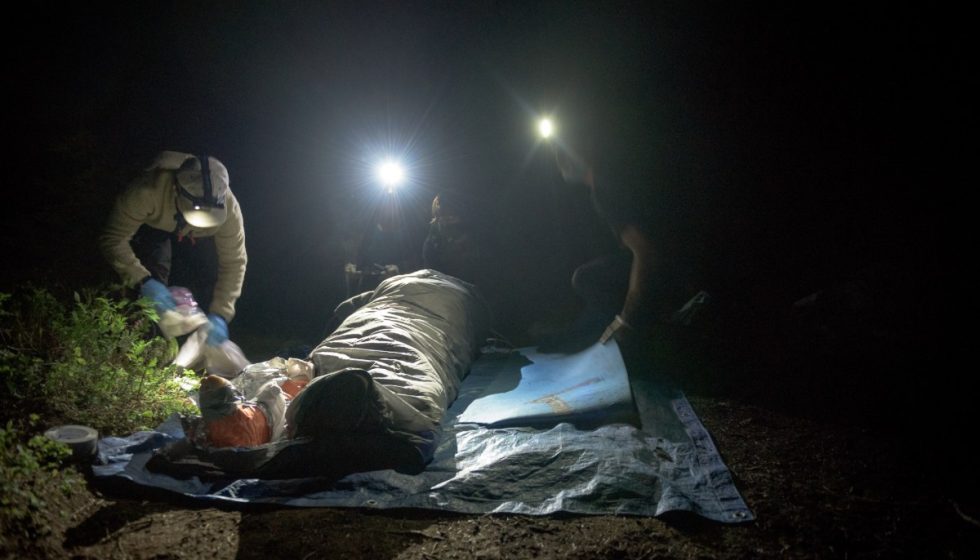
Our courses start in one of our training bases, but at least 75% of wilderness first aid courses take place in the great outdoors – rain or shine!
- Vancouver Training Base: 8168 Granville St., Unit 209
Vancouver Outdoor Classrooms: Pacific Spirit Park - Squamish Training Base: 1909 Maple Drive, Unit 101
Squamish Outdoor Classrooms: Smoke Bluffs, Stawamus River, & Stawamus Chief Provincial Park.
Red Cross Wilderness First Aid Field Guide
Reference materials are included in your tuition fee. For early access, please contact us.
Certification
- Successful participants will receive a nationally recognized Red Cross Remote First Aid certificate with CPR/AED-C.
- Participants will also receive a Red Cross Emergency First Aid certificate, which is recognized by WorkSafeBC as equivalent to Basic First Aid (OFA-1).
RFA Course Schedule
Weekend RFA Course Schedule
Online Pre-Study (3 Hours)
Friday Evening: 5:30 PM - 9 PM
Indoor classroom
Saturday - Sunday: 9 AM - 7 PM
Outdoor classroom
1 hour evening activity, Saturday
Weekday RFA Course Schedule
Online Pre-Study (3 Hours)
Three Days: 9 AM - 7 PM
All outdoor learning, weather dependent
1 hour evening activity on Day 2
*These schedules are estimates, subject to change by the course instructor.
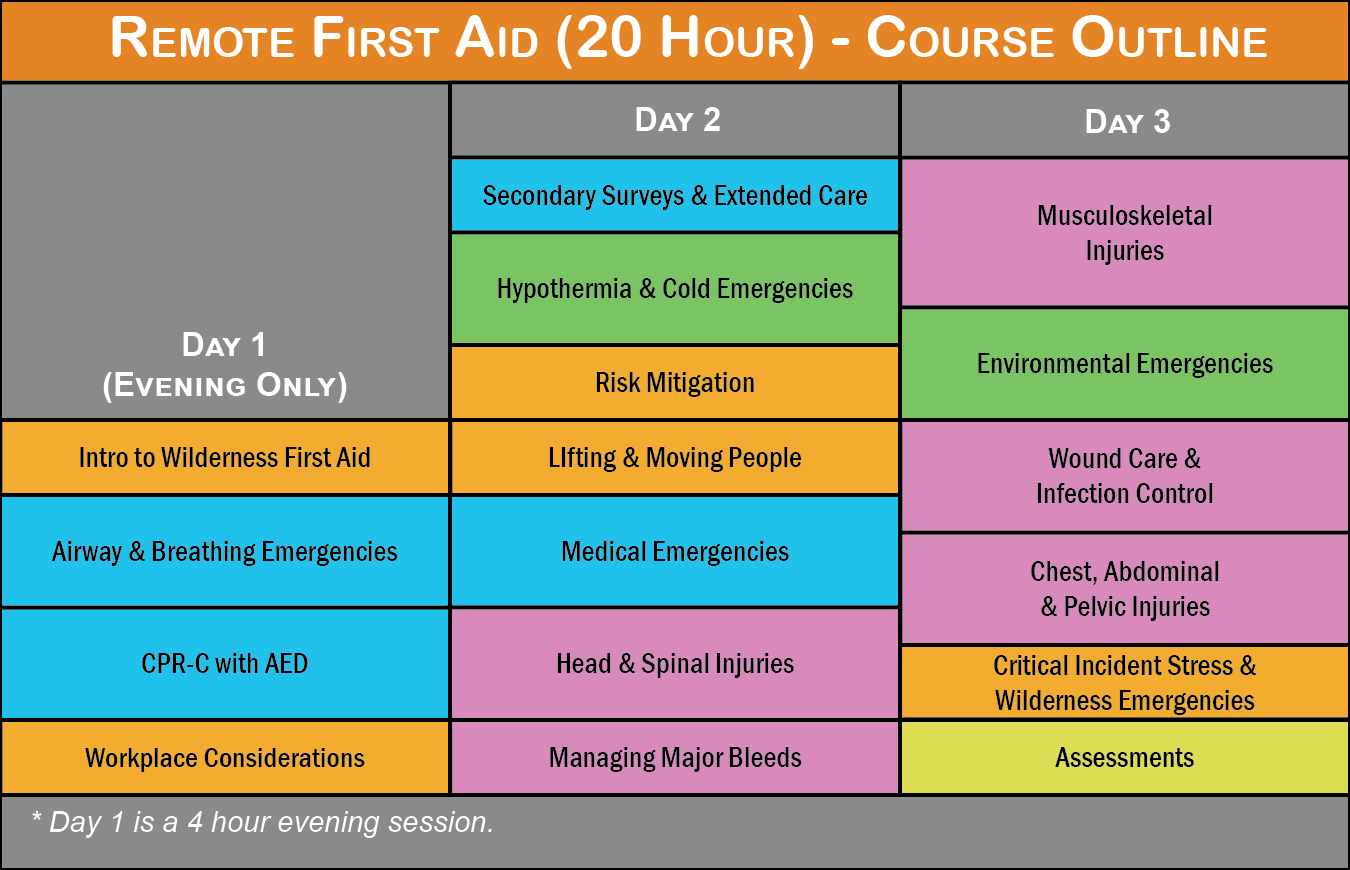
Sample RFA Course Outline
Basic First Aid (OFA-1)
At Coast, your Remote First Aid training fully includes a Red Cross Emergency First Aid (RFA) certificate. EFA is recognized by WorkSafeBC as an equivalent to Basic First Aid (formerly OFA-1).
Please note: To receive your Emergency First Aid, you must have completed the online training BEFORE your in-person training begins.
Further Training
RFA certificate holders can upgrade to wilderness first aid with Intermediate First Aid equivalency by taking a 24 hour upgrade course. It is recommended that you do this within one year of your original course.
Wilderness First Aid FAQs
WHAT ARE THE BENEFITS TO WILDERNESS FIRST AID? I’M TRYING TO DECIDE IF I SHOULD TAKE A 1-2 DAY URBAN FIRST AID COURSE OR ONE OF YOUR WILDERNESS COURSES.
Urban first aid courses are designed for situations where Emergency Medical Services will arrive in 10 to 15 minutes. Wilderness First Aid is designed to give you the tools and knowledge necessary to care for a sick or injured person for hours or days, depending on your training level. To do this, we focus on giving you a lot more tools and decision making ability by helping you to understand what is going on ‘under the hood’ during a medical emergency. Emergencies in the backcountry are unpredictable – we also help you to have the confidence to use your own common sense to decide a course of action when the situation is unclear.
WHAT GEAR DO I NEED TO BRING?
A list of recommended gear will be sent to you with your course information package. In short, you should prepare for each day as if for a day hike, including adequate footwear, layers, rain protection, snacks, water, and your ten essentials. It is very important that you prepare for the worst weather the season might offer – you will spend a lot of time outdoors, and being cold and wet will negatively affect your learning.
I WANT TO TAKE THIS COURSE BUT I DON’T DRIVE – WILL I HAVE TO ARRANGE TRANSPORTATION TO A REMOTE LOCATION?
Our 20- and 40-hour courses take place in areas that offer easy public transportation and local biking access. In Vancouver, it’s Pacific Spirit Park – located between Vancouver and the University of British Columbia. In Squamish, most courses take place in the areas around Smoke Bluffs, the Stawamus River, or the Stawamus Chief.
ALL OF MY PREVIOUS FIRST AID COURSES WENT IN ONE EAR AND OUT THE OTHER. WHAT MAKES YOUR TRAINING STICK?
Great question – there are a few factors that make our courses stand out:
- Exceptional instructors and an outstanding commitment to learning. All of our instructors are experienced responders with plenty of patient care experience, a love of the outdoors, and a passion for teaching. They have not only completed the Canadian Red Cross’s exceptional WFA instructor training, but also our own rigorous in-house instructor development and apprenticeship program.
- Our courses always take place in natural wooded areas or coastlines that offer an immersive experience – you feel like you are really dealing with medical emergencies in the wilderness.
- We spend a lot of time finding the perfect teaching accessories – including functional medical learning aids, anatomical models, theater-quality make-up, and dastardly props to help create a feeling that you are responding to a ‘real’ emergency.
- Combine all of this with our scenario-focused teaching model – which gives you more hands-on practice than any other first aid course – and you will walk away with more confidence, better skills, and longer skill retention than you would ever expect from a course of this length.
THE LAST COMPANY I SCHEDULED WITH CANCELLED MY COURSE BECAUSE THEY DIDN’T HAVE ENOUGH STUDENTS. HOW OFTEN DOES THIS HAPPEN AT COAST WILDERNESS MEDICAL TRAINING?
Almost never. You are committing your time to this course, and the least we can do is the same.
That being said, our more advanced courses cannot be delivered effectively without a certain minimum number of students. If we are ever unable to reach these numbers, you will be informed as soon as possible, receive hearty and heartfelt apologies, a full refund, and an invitation to attend the next training opportunity at a discounted price.
All 2025 - 2026 RFA Dates
Courses are open for registration up to 6 months in advance. To register for courses scheduled later, please contact our office.
All 2025 RFA Dates
- Friday, November 21st – Sunday, November 23rd (Squamish)
- Friday, November 21st – Sunday, November 23rd (Vancouver)
- Tuesday, December 9th – Thursday, December 11th (Vancouver)
- Friday, December 12th – Sunday, December 14th (Squamish)
All 2026 RFA Dates
- Friday, January 2nd – Sunday, January 4th (Vancouver)
- Friday, January 30th – Sunday, February 1st (Squamish)
- Friday, February 27th -Sunday, March 1st (Squamish)
- Friday, March 13th – Sunday, March 15th (Vancouver)
- Friday, April 17th – Sunday, April 19th (Vancouver)
- Friday, May 1st – Sunday, May 3rd (Squamish)
- Friday, May 15th – Sunday, May 17th (Vancouver)
- Friday, June 12th – Sunday, June 14th (Vancouver)
- Friday, June 26th – Sunday, June 28th (Squamish)
- Friday, July 10th – Sunday, July 12th (Squamish)
- Friday, July 17th – Sunday, July 19th (Vancouver)
- Friday, August 14th – Sunday, August 16th (Squamish)
- Friday, October 9th – Sunday, October 11th (Vancouver)
- Friday, October 16th – Sunday, October 18th (Squamish)
- Friday, December 4th – Sunday, December 6th (Vancouver)
- Friday, December 18th – Sunday, December 20th
All 2027 RFA Dates
2027 Dates Coming Soon
Learn More...
Use the form below to:
- Request a free phone call with an wilderness first aid program specialist.
- Get free, unlimited access to our online WFR Pre-study.
- Submit any other questions you have.