

Wilderness First Responder
With Basic Life Support
Price
$1295
Online Study
6 Hrs
In Person
80 Hours / 8 Days
Locations
Vancouver, Squamish
Prerequisites
None
- Includes all learning materials!
- No additional international student fees!
- Includes personal stethoscope and blood pressure cuff!
Registration
To register with a 50% deposit, use the code WFR50 at checkout. You will be emailed an invoice for the balance, due the first day of your training.
About WFR
Whether you are an outdoor pro leading people out of the comforting reach of urban ambulance services, or a seasoned adventurer exploring the best Canada has to offer, Wilderness First Responder will prepare you to manage accidents and medical emergencies in harsh environments where rescue might be hours or days away.
From improvised treatments to professional level gear, this is Canada’s top-tier training for anyone who spends time where resources are scarce, access difficult, and communications unreliable.
Choosing WFR
Is WFR Right For You?
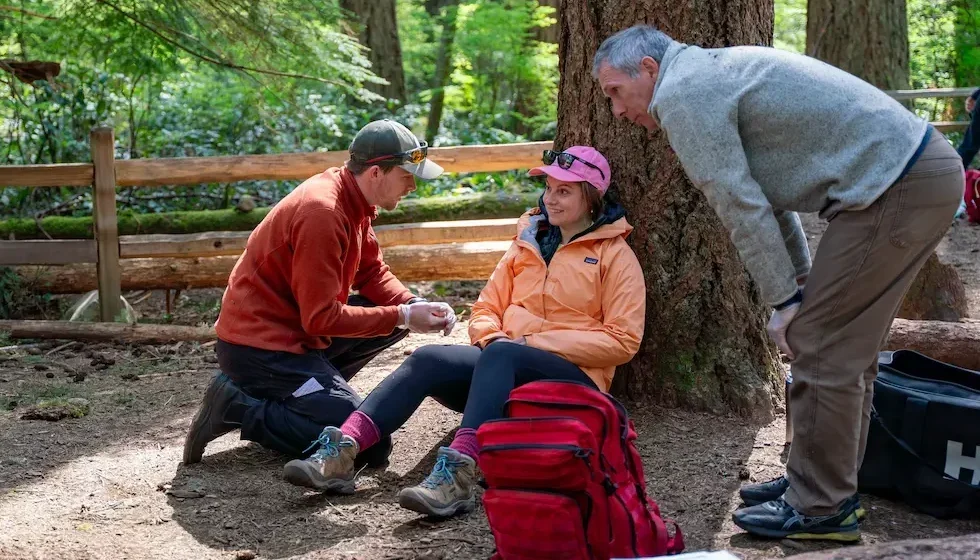
Wilderness First Responders can be found in a wide variety of roles throughout the backcountry, including guides, instructors, outdoor educators, ski patrol, search and rescue, and many more. These positions are diverse, but all expect a high level of personal responsibility, and require that you are prepared to take the lead in high-stress, high-reward situations where you must make decisions quickly, keep your head, and maintain your professionalism under extreme circumstances for extended periods of time.
If you think you are well-suited to such a position, than this program is for you.
WARNING: A WFR course is an experience you will never forget; to create this experience, the training is intensive and both physically and mentally challenging. 50% – 80% of your training will take place outside, no matter the weather, and the curriculum includes moderate hiking and an overnight experience.
Full participation is required. Please do not hesitate to contact us if you have any concerns about this experience.
Careers
Our alumni are found in many diverse careers, including backcountry guides, coaches and instructors, high school and middle school outdoor education teachers, ski patrol, volunteer search and rescue and, many more.
Furthermore, WFR indicates that you can handle a medical emergency in an austere environment, and is a strong asset when applying to any job that takes place outside of easy EHS access.
Further Studies
WFR graduates can upgrade their certification to a 120 hour Emergency Medical Responder, which offers opportunities in formal EHS systems, fire departments, and with private ambulance companies. EMR license holders are also considered qualified for jobs that require Advanced First Aid (OFA-3).
Schedule
Your Wilderness First Responder training includes an online pre-study study module followed by 8 days of in-person training usually starting on Friday and ending the following Saturday. The following is a typical schedule:
Online Pre-Study (6 Hours)
Day 1-4 (Usually Friday to Monday, 9 AM - 6 PM)
Evening Scenario on Day 2
Day 5 (Rest Day... Usually Tuesday)
You'll need it...
Day 6-8 (Usually Wednesday to Friday, 9 AM - 6 PM)
Overnight Scenario on Day 8
Schedules are intended as outlines, subject to change by the course instructor.
Course Details
Locations
Our courses start in one of our training bases, but at least 75% of wilderness first aid courses take place in the great outdoors – rain or shine!
- Vancouver Training Base: 8168 Granville St., Unit 209
Vancouver Outdoor Classrooms: Pacific Spirit Park - Squamish Training Base: 1909 Maple Drive, Unit 101
Squamish Outdoor Classrooms: Smoke Bluffs, Stawamus River, & Stawamus Chief Provincial Park.
Reference Materials
- Red Cross Wilderness First Aid Field Guide
- WFR Quick Reference: A resource of treatment guidelines, drug monographs, patient care flow charts, and useful information to have at your fingertips.
Reference materials are included in your tuition fee. For early access, please contact us.
Certification
- Successful participants will receive a Red Cross Wilderness First Responder with Basic Life Support (BLS) certification. This certification is nationally recognized, and internationally recognizable.
Further Training
WFR graduates can upgrade their certification to the 120 hour Emergency Medical Responder certificate.
EMR offers job opportunities in formal EHS systems, fire departments, and private ambulance companies. EMR also includes a pathway to achieving an Advanced First Aid (formerly OFA-3) certificate.
WFR FAQs
Which professional organizations recognize the WFR certification?
The following are a few of the professional organizations that recognize our WFR certification. If you are curious about another organization, please enquire with them or us for more information.
- BC Emergency Medical Assistants Licensing Board: Earn 40 continuing education credits.
- Association of Canadian Mountain Guides: Qualifying prerequisite for the ACMG Training & Assessment Program.
- Canadian Ski Guides: Qualifying prerequisite for CSGI Level 1.
- Sea Kayak Guides Alliance of BC: Qualifying prerequisite for SKGABC’s Level 2 or 3 Guide Programs.
- Recreational Canoeing Association of British Columbia: Qualifying prerequisite for RCABC Canoe Expedition Guide certification.
- Professional Mountain Biker Instructor Association: Qualifying prerequisite for all levels of PMBIA courses.
I have previous medical training. Do I have to do the full course to receive a WFR certificate?
Unfortunately, the nature of wilderness medicine would make a prior learning assessment very difficult to conduct. That said, we have previously trained health care providers including paramedics, nurses, physicians, care aides, dentists, and psychiatrists, and they have all been surprised and delighted by how much they learned, how much fun they had – and how many CE credits they earned to maintain their license!
Are there many job opportunities for WFRs in British Columbia?
Yes! WFR is not usually a specific job title, but the certification is a requirement or strong asset for a wide variety of outdoors positions and careers. Adding a WFR certification to your resume can make you much more attractive to employers, and give you a step up when applying to the job of your dreams!
I have a part-time job or go to school—can I do the WFR program while working or studying part-time?
It is strongly recommended that you do not attempt to take on the WFR unless you can clear your schedule for the 9 days of the course. Our WFR is mentally and physically taxing, and if you are not able to come to each day well-rested, you will find it very difficult to give your training the necessary attention to be successful.
What gear do I need for this course?
A list of recommended gear will be sent to you with your course information package. In short, you should prepare for each day as if for a day hike, including adequate footwear, layers, rain protection, snacks, water, and your ten essentials. It is very important that you prepare for the worst weather the season might offer – you will spend a lot of time outdoors, and being cold and wet will negatively affect your learning.
All 2025-2026 WFR Dates
Courses are open for registration up to 6 months in advance. To register for courses scheduled later, please contact our office.
All 2025 WFR Dates
- Friday, December 5th – Saturday, December 13th (Squamish)
- Friday, December 12th – Saturday, December 20th (Vancouver)
All 2026 WFR Dates
- Friday, January 16th – Saturday, January 24th (Squamish)
- Saturday, February 14th – Sunday, February 22nd (Vancouver)
- Saturday, March 14th – Sunday, March 22nd (Squamish)
- Friday, April 3rd – Saturday, April 11th (Vancouver)
- Friday, May 15th – Saturday, May 23rd (Squamish)
- Friday, September 4th – Saturday, September 12th (Vancouver)
- Friday, September 25th – Saturday, October 3rd (Squamish)
- Friday, October 16th – Saturday, October 24th (Vancouver)
- Friday, October 30th – Saturday, November 7th (Squamish)
- Friday, November 13th – Sunday, November 21st (Vancouver)
All 2027 WFR Dates
2027 Dates Coming Soon
Learn More...
Use this form to request a free phone call with a wilderness first aid program specialist, get free, unlimited access to our online WFR Pre-study, and ask any other questions you have.