
… on successfully achieving a Canadian Red Cross Remote First Aid, Wilderness First Aid, or Wilderness First Responder certification!
You have passed your course, but your learning doesn’t have to end! On this page, you will find additional resources for your enjoyment and education, as well as key information on finding, downloading and verifying your certificate. As always, please do not hesitate to contact us with any questions you might have.
This page has a lot of information , including:
Accessing and downloading your certificate from the Canadian Red Cross platform.
Great resources from the Wilderness Medical Society, and others.
Scroll down to learn about all of these resources, but first…
You will refer to it often.

If you have successfully completed your course, you should receive an email from the Canadian Red Cross within three business days. If you do not receive your certificate by email in that time, check your spam folder, and contact us if you’re still having trouble: we will move the necessary mountains to make sure you have the credentials for which you worked so hard.
Please note: if you have unpaid course fees, or if any course requirements are incomplete, your certificate cannot be processed until these are resolved.
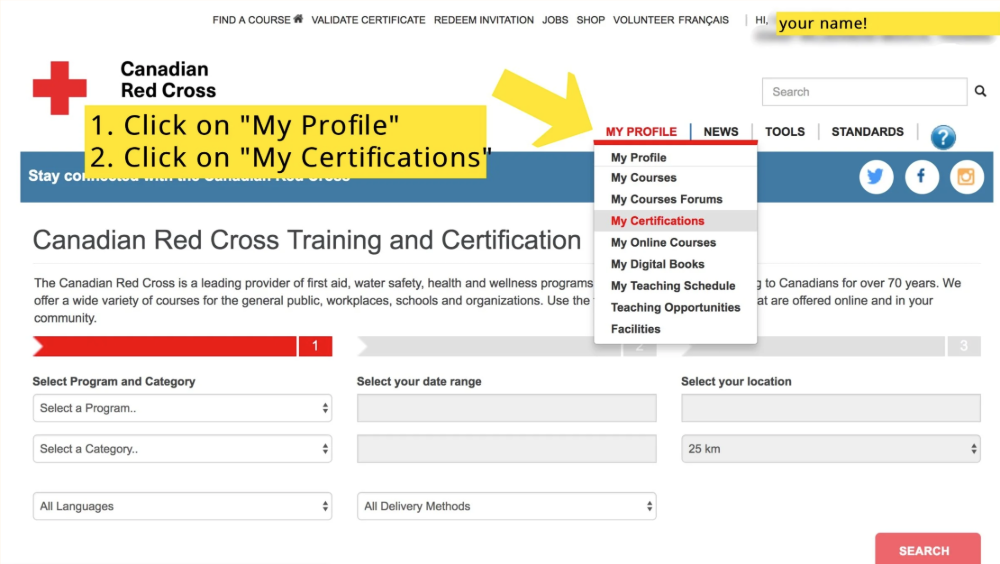
Below are instructions for finding your online certificate using https://myrc.redcross.ca.
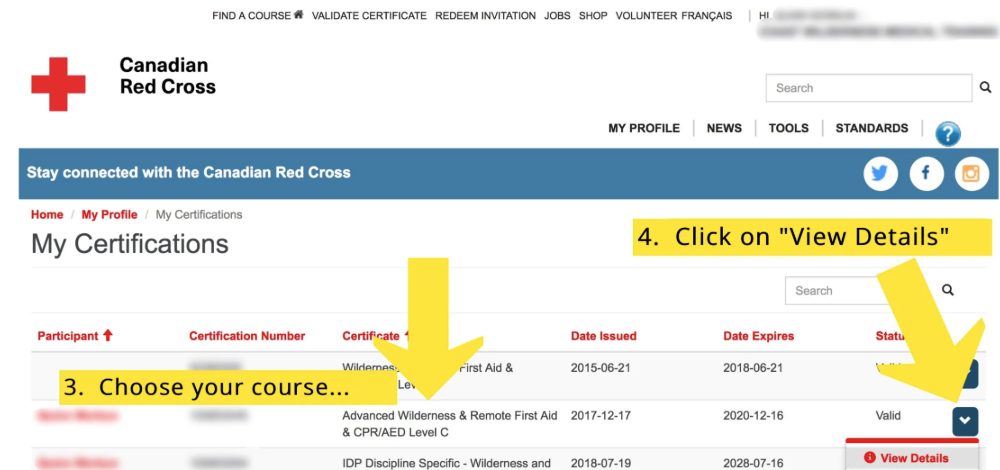
5. Choose the course that you want the certificate for, then click on the arrow to the right of it and click View Details. This page will look a little different for everyone, as it will only show the courses that you have taken.
6. A popup box will appear…
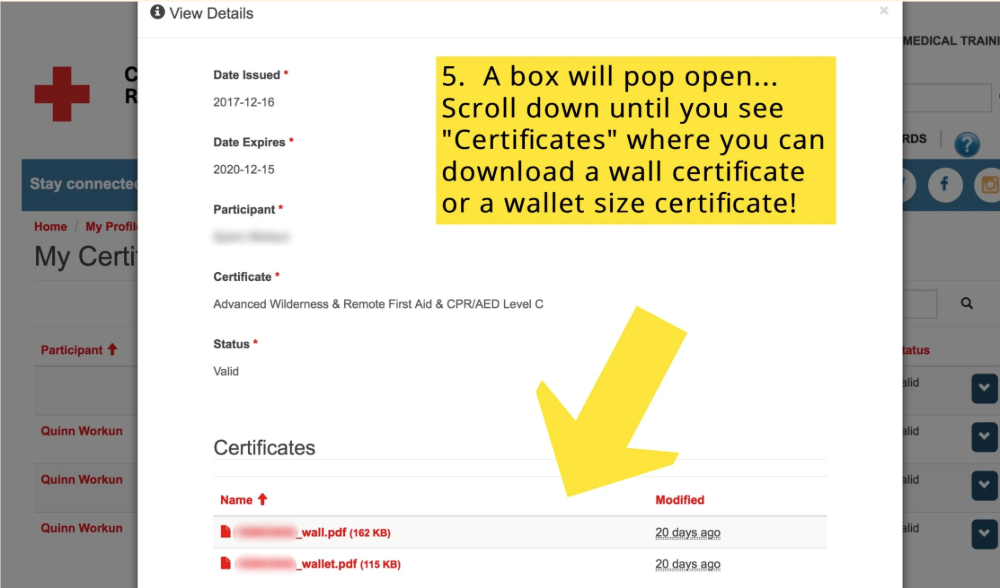
7. Click on the certificate you wish to download… and voila! Your certificate should pop right up.
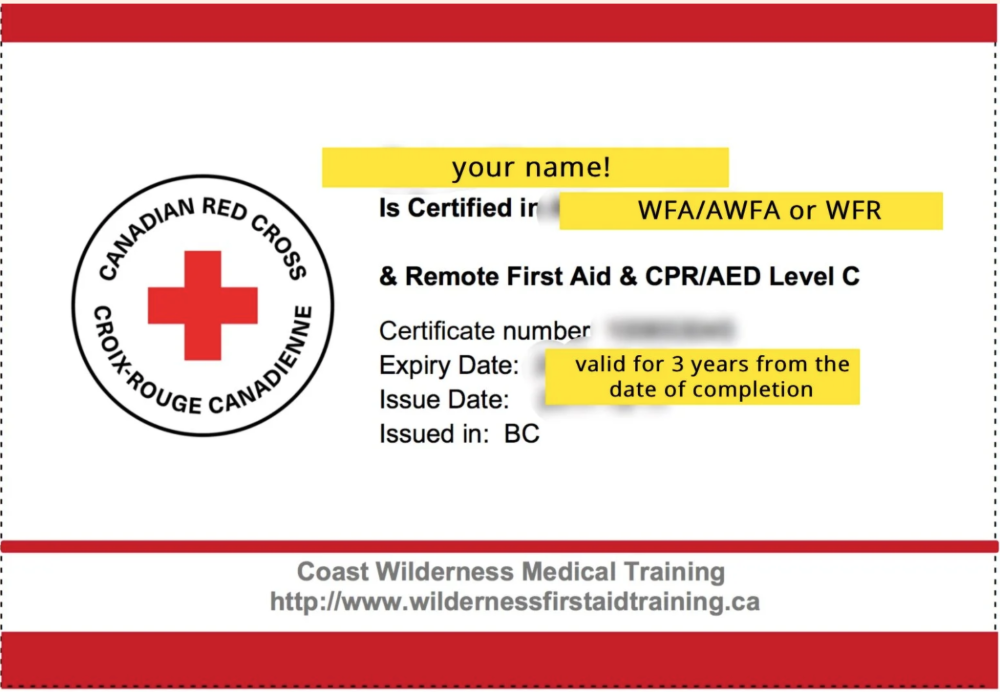
As always, if you have any trouble at all, we are only an email or phone call away!

The non-profit Wilderness Medical Society is the world’s leading organization devoted to wilderness medicine. Among their publications are the Clinical Practice Guidelines, which provide invaluable guidance to responders of all training levels and licenses who are in responding to wilderness medical challenges.
The WMS Clinical Practice Guidelines are a key resource to our instructors and program developers at Coast, and we hope that you find them as useful as we have.
Prevention and Treatment of Spinal Cord Protection
Prevention and Treatment of Accidental Hypothermia
Prevention and Treatment of Acute Altitude Illness
Prevention and Treatment of Frostbite
Prevention and Treatment of Heat Illness
Prevention and Treatment of Drowning
Guidelines for Water Treatment
Guidelines for Diabetes Management
Prevention and Treatment of Snow Burial
Prevention and Treatment of Pit Viper Envenomation
Prevention and Treatment of Anaphylaxis
Managing Eye Injuries and Illnesses in the Wilderness
Prevention and Treatment of Exercise-Associated Hyponatremia
Prevention and Treatment of Lightning Injuries
Treatment of Acute Pain in Remote Environments

Thank you again for choosing Coast Medical Training. We wish you the best of luck in licensing and your career. As always, please do not hesitate to reach out if there is anything at all that we can do for you.
Kieran Hartle,
Program Director,
Coast Medical Training.